
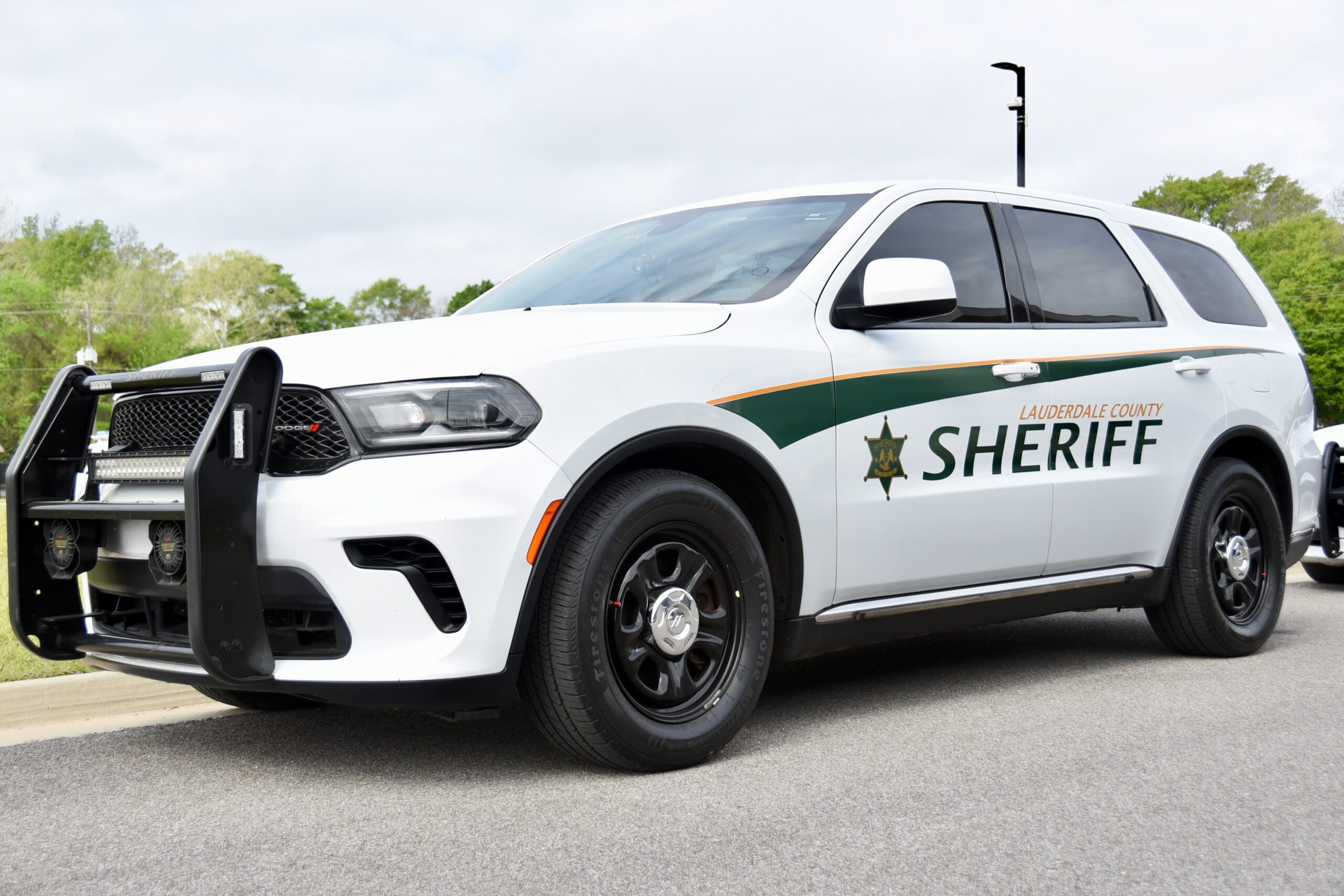
Motorists will want to think twice about driving impaired as the Lauderdale County Sheriff’s Department cracks down as part of a national Drive Sober or Get Pulled Over campaign. Starting Wednesday, Aug. 19 and continuing through Labor Day weekend, the annual enforcement period emphasizes safe driving.
Lt. Kris Cokel said the Drive Sober or Get Pulled Over campaign is held twice a year around Labor Day and again around Thanksgiving and Christmas.
“What we do is just enhanced or increased traffic enforcement with emphasis on DUI,” he said.
Throughout the campaign, Lauderdale County deputies will hold sobriety checkpoints and safety checkpoints throughout the county to find drivers under the influence and identify unsafe driving practices. Sobriety checkpoints, he said, are specifically focused on impaired drivers, while safety checkpoints are primarily geared toward proper licensing, equipment, insurance and other requirements.
While checkpoints are intended to find specific violations, Cokel said deputies will be enforcing the law and any other illegal activity they uncover will be handled as well.
Drivers should also be aware of a recent change in state law that went into effect July 1. Senate Bill 2314, which was passed earlier this year by the State Legislature, updated language to clarify drivers must physically hand law enforcement their driver’s license upon request. Previous language only said drivers had to present their license but did not specify what that meant.
“Every licensee shall have the required license in his or her immediate possession at all times when operating a motor vehicle and shall display the same by handing the license to a law enforcement officer for inspection, upon demand of a justice court judge, a peace officer or license examiner or other authorized employee of the commissioner,” the bill reads.
According to the National Highway Traffic Safety Administration, drunk driving kills one person in America every 44 minutes. That’s roughly 12,000 fatalities each year.
Mississippi Department of Health data show approximately 150 people die in crashes that involve alcohol-impaired drivers throughout the state each year.
While the legal limit for impaired driving is a blood alcohol concentration (BAC) of 0.08, the effects of drinking begin at much lower levels. At a BAC of 0.02, drivers will already have trouble performing multiple tasks at the same time and see declining visual abilities. At a BAC of 0.05, drivers will have difficulty steering and experience reduced coordination, ability to follow moving objects and reaction in emergency situations, according to the NHTSA.
Cokel said residents are encouraged to use common sense and have a designated driver if they planned to be drinking. Marijuana use, even with a valid medical marijuana card, can still make drivers impaired as well.
In stay safe on the roads, the NHTSA encourages residents to:
• Before drinking, plan a safe and sober ride home.
• Don’t let someone get behind the wheel if they’ve been drinking.
• If you’re hosting a gathering, make sure all your guests have a sober ride home.
If you see an impaired driver, call 911. And always wear your seat belt — it’s your best defense against impaired drivers.