
In the early days of emergency communication, 911 was a number to call to be connected with the proper law enforcement, fire or medical agency. That gave birth to the well-known phrase, “What is your emergency.”
Modern E-911 call centers, however, do much more than forward calls, and dispatchers play a pivotal role in both getting residents the help they need and making sure first responders stay safe. In the past 12 months, Lauderdale County E-911 received approximately 50,950 911 calls, with the majority (73%) involving Meridian Police Department.
“Under that 9-11 switchboard idea, that’s what we needed to know. Where do I have to send this call? What kind of emergency are you having so I can send you law or fire or medical,” said Lauderdale County E-911 Director Jared Stanley. “But today, here locally, with us dispatching for all of our agencies outside of Metro, we don’t need to know the ‘what’ first.”
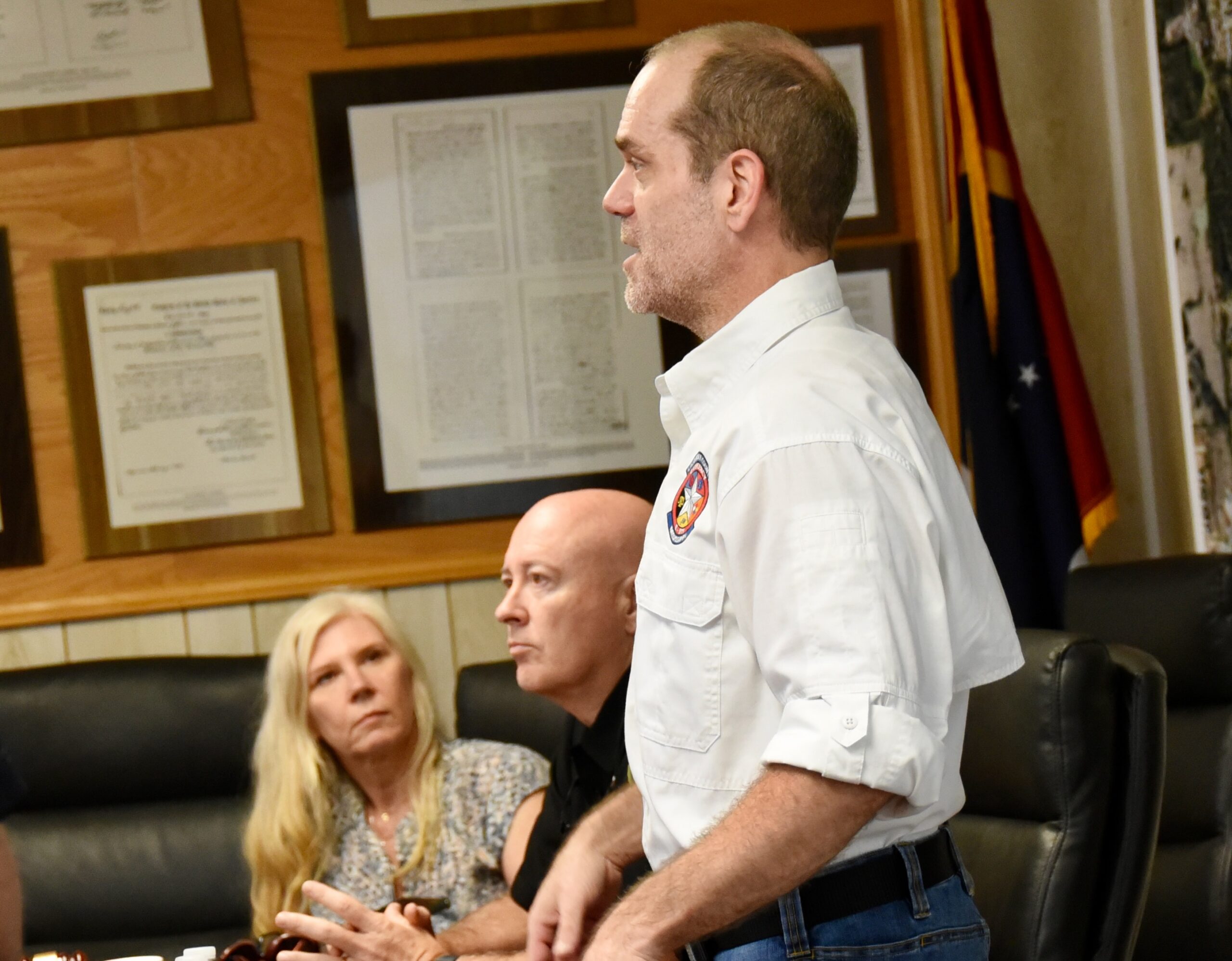
Speaking to a group of law enforcement, residents and business owners Saturday at Marion Town Hall, Stanley shared some of the inner workings of Lauderdale County E-911, what information dispatchers need and what is often happening in the background that callers don’t hear.
It is not uncommon for callers to get testy with dispatchers because they’re asking questions instead of sending help, Stanley said. That help, however, is already on the way, and the information dispatchers are gathering is helping first responders get a better idea of the scene they’re heading towards.
One of the very first questions dispatchers will ask is where the emergency is located. While modern technology often provides a location for the call, it isn’t always accurate. Sometimes it’s the billing address for the phone’s account or the cell phone tower the call is routing through.
Asking where the emergency is located is a quick way to verify that information and get help on the way as soon as possible.
“We are trying to get the information in that’s necessary to get officers rolling down the road in the very first place and the questions we know those responders are going to want to know before they show up to the accident,” Stanley said. “So, I’ve got to know where you are to at least get them rolling, and then while they’re rolling, I’m going to get more questions answered and get that information out to responders before they ever get to you.”
For law enforcement and other first responders, Stanley said proper radio usage and clear communication goes a long way in helping dispatchers do their job. Simple things such as providing information in a certain order makes a big difference. And just as with residents calling 911, dispatch needs to know where they are.
While providing a location and answering dispatchers’ questions during a 911 call is key, there are steps residents and business owners can do ahead of time in case of an emergency. Businesses or homes with gates, alarms or other security measures can provide codes to E-911 to help first responders gain entry should the need arise. Hard to find homes or businesses can also provide detailed directions to help responders arrive more quickly, and residents can share any important medical data as well.
All the information can be added to the E-911 database and can help police, fire and medical services arrive sooner and provide better care, Stanley said. Residents and business owners can email information to e911@lauderdalecounty.org.
Smart phones are another tool that can help share important medical information with dispatchers. On an iPhone platform, go to health app, medical ID or settings, safety & emergency, medical ID on android and enable “share during emergency call.” Enabling the setting will automatically share medical data users enter with dispatch during a 911 call.
For those without smart phones, a similar, free tool by the American Red Cross is available at emergencyprofile.org.
Marion Police Chief Randall Davis thanked Stanley for giving insight into emergency dispatch and said Saturday’s discussion will not be the last.