
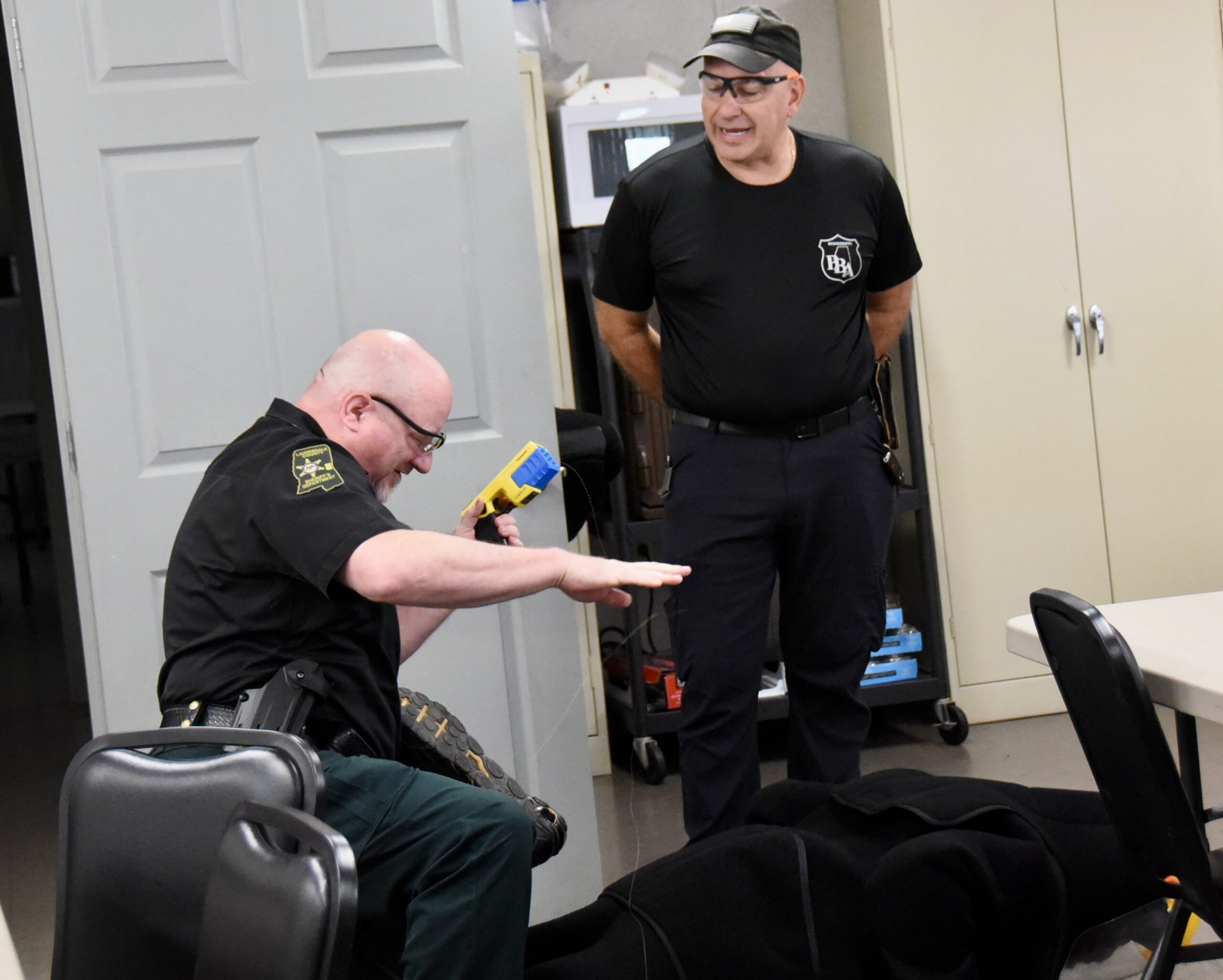
Lauderdale County Sheriff’s deputies refreshed their skills at the Meridian Lauderdale County Public Safety Training Facility as the department held quarterly firearms training and taser training throughout the week.
The training, which involved running through different scenarios with both firearms and taser, is intended to expose deputies to similar situations they may encounter on the job. Lt. Andy Matuszewski said the quarterly firearms training coincided with the department’s annual taser training, so deputies were able to go through both.
Scenarios for taser training are based on real-life situations deputies have encountered previously, Matuszewski said. While the training focused on proper use of the taser, it also required deputies to use deescalation techniques, look toward their own safety and the safety or bystanders, and utilize good judgement throughout the encounters.
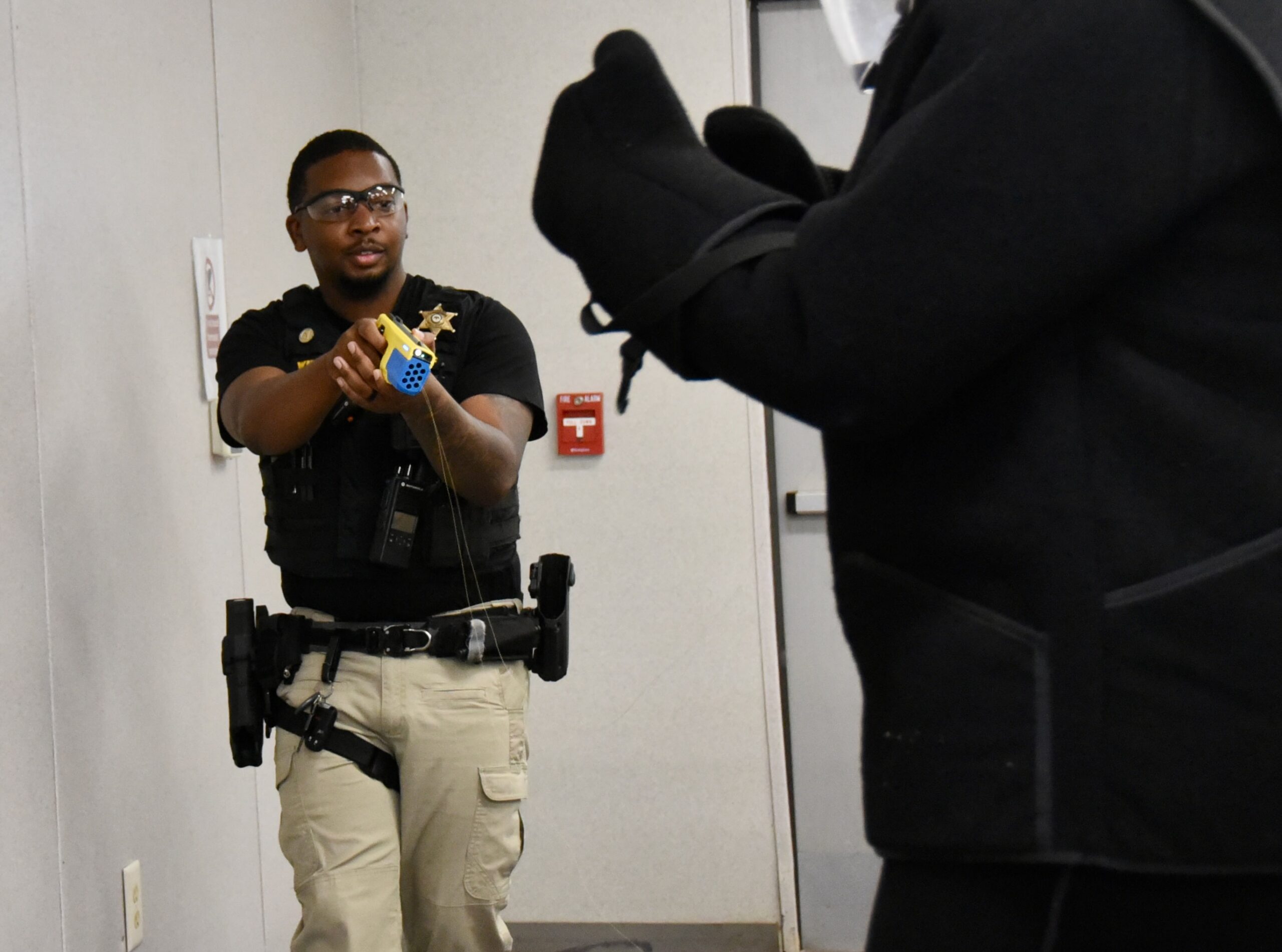 “The goal was to give our deputies different scenarios in complex environments and have them manage those things safely, not only for themselves, but also for the person they were engaged with and the general public,” he said.
Law enforcement officers have several less-lethal tools at their disposal, Matuszewski said, but the taser is unique. Sprays and other options use pain to get compliance, he said, but someone in crisis or on drugs doesn’t always respond to pain as expected. The taser works by interrupting the electrical signals from the brain to the muscles.
“By interrupting those at those lower levels, we’re able to stop that person from doing what they wanted to do to where we can safely take them into custody,” he said. “And often times, as we mentioned, these people are not in their right minds, so while we need to stop them, we also don’t want to hurt them anymore than what we absolutely have to.”
Instructors change up the practice scenarios each time the training is held, and some situations don’t necessarily require deputies to fire their tasers, Matuszewski said. The goal is to respond to the subject’s actions not to use force.
“We look for that lowest level of impact that we can come up with, and sometimes it’s just being a good human,” he said. “Sometimes it’s just talking to somebody and helping them work through whatever their crisis in the moment is.”
On the firearms side, Deputy Bolie Stokes said deputies were tasked with navigating an indoor environment in a number of different scenarios. The goal of the training was to help them train how to respond to a threat on their own.
In a perfect world, deputies would simply wait for backup, Stokes said, but that isn’t always possible. Should a situation arise where a deputy must respond on their own, having the experience and training will be invaluable.
“In a realistic scenario, they may not be able to wait for backup in certain situations. They may have to respond and go in as an individual officer or individual deputy,” he said. “So, they need to see it in a training environment, not when it’s a real thing.”
Next week deputies, Meridian police officers and other law enforcement will take even more training as the East Mississippi Crisis Intervention Team hosts another week-long CIT officer certification course. The 40-hour course brings together mental health professionals, advocates, former mental health patients and others to put law enforcement through a rigorous training centered on responding to mental health crisis.
Those that pass the course will earn their CIT certification and take the new skills back to their home communities to help others.